Platform Evaluation
Vendor lock-in is not a yes-or-no feature. Every platform creates some dependency. The useful question is whether that dependency is visible, acceptable and reversible.

Start with the exit
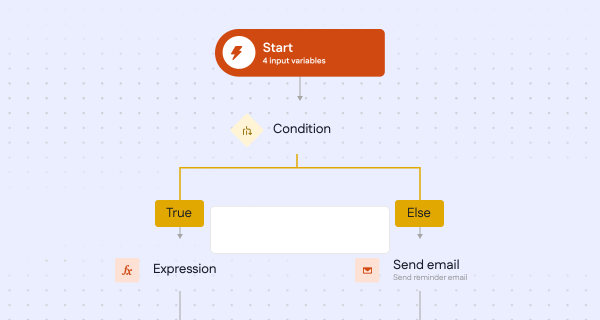
Most platform evaluations start with features. A lock-in test starts with the opposite question: what happens if you leave? Test what can be exported, what still depends on the platform, what would need to be rebuilt and who could operate the application afterwards.


What to test
Four lock-in questions every enterprise buyer should answer
A credible exit path covers more than source-code ownership. Test the application, runtime, connected systems and the real effort required to operate independently.
Test before selection
Run the exit test before the platform scales


Development models and dependency
No development model is dependency-free. Compare where the dependency sits and what you need to prove before committing.
Category
Vibe coding tools
AI Coding Agents
Platform extensions
AI Application Generation
Custom Development
Key players
Lovable, Base44, Cursor, Replit
Claude Code, GitHub Copilot, ChatGPT
Mendix, OutSystems
Power Apps, ServiceNow, Salesforce
Betty Blocks
Internal teams, agencies
Core strenght
Hosted builder, generated project and deployment model vary by tool
Developer workflow, models and tooling used to create the code
Platform model, runtime and lifecycle tooling
Vendor ecosystem, licensing and connected services
Generation, governance and application lifecycle platform
Cloud stack, frameworks and internal team knowledge
Core weakness
Export the full app and deploy it independently
Build, test and operate the repository without the agent
Test what exports and what still needs the platform runtime
Trace vendor-specific APIs, licensing and cross-system dependencies
Export a representative app and test the full operating path
Prove another team can operate it with documentation, tests and infrastructure access
Frequently Asked Questions
Got questions?
We have answers.
What is vendor lock-in in an AI application platform?
Vendor lock-in exists when switching away from a platform becomes technically, operationally or commercially difficult enough that staying is the only practical option. In AI application platforms, dependency can exist across code, runtime, data, integrations, deployment, identity and managed services.
Is code export enough to avoid vendor lock-in?
No. Code export is an important test, but the application may still depend on a proprietary runtime, managed services, integrations or deployment processes. The stronger test is whether your team can operate the application in the target environment after export.
What should we include in a platform exit test?
Test application output, runtime dependency, data portability, integrations, identity and governance, deployment options and the commercial effort required to leave. Use the same representative application for every vendor you evaluate.
Is all platform dependency bad?
No. Managed platforms create value by taking responsibility for parts of the application lifecycle. The goal is to understand which dependencies you are accepting, what value they provide and whether the switching cost fits your risk profile.
How does Betty Blocks approach application ownership?
Betty Blocks states that generated applications use React and WebAssembly and that application code can be exported. Enterprise buyers should still validate the complete exit path with their own reference application, integrations and target infrastructure.