AI Application Generation Platform
Regulated organizations should evaluate more than generation speed. The platform must support governance, security, enterprise integration, controlled production, application ownership and a credible exit path.

The evaluation standard
For regulated enterprises, an AI application platform should do six things well: govern who can build and release, protect access to data and systems, integrate with existing architecture, provide a controlled path to production, preserve application ownership, and support a realistic exit strategy.


Core requirements
The controls regulated enterprises should require
A platform should be evaluated on the controls it provides before, during and after an application reaches production.
Evaluate before you commit
Test the platform against a real regulated use case
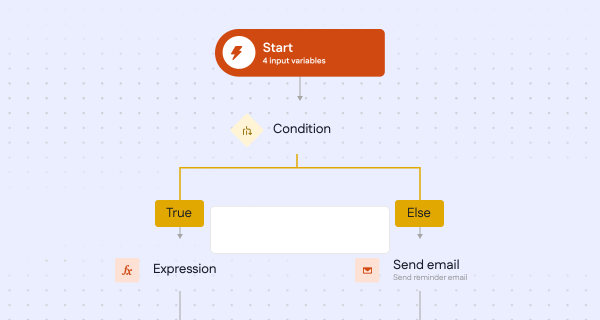
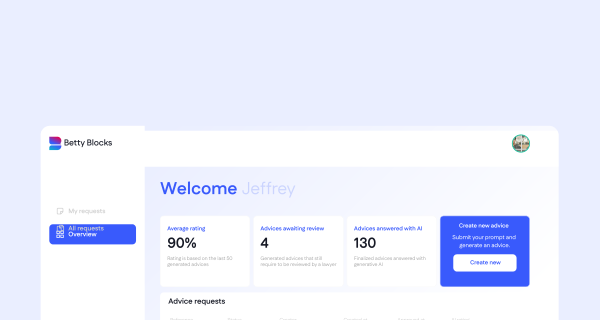

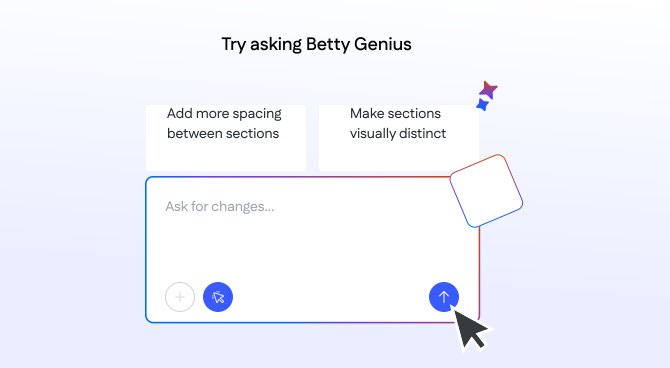

AI tools comparison
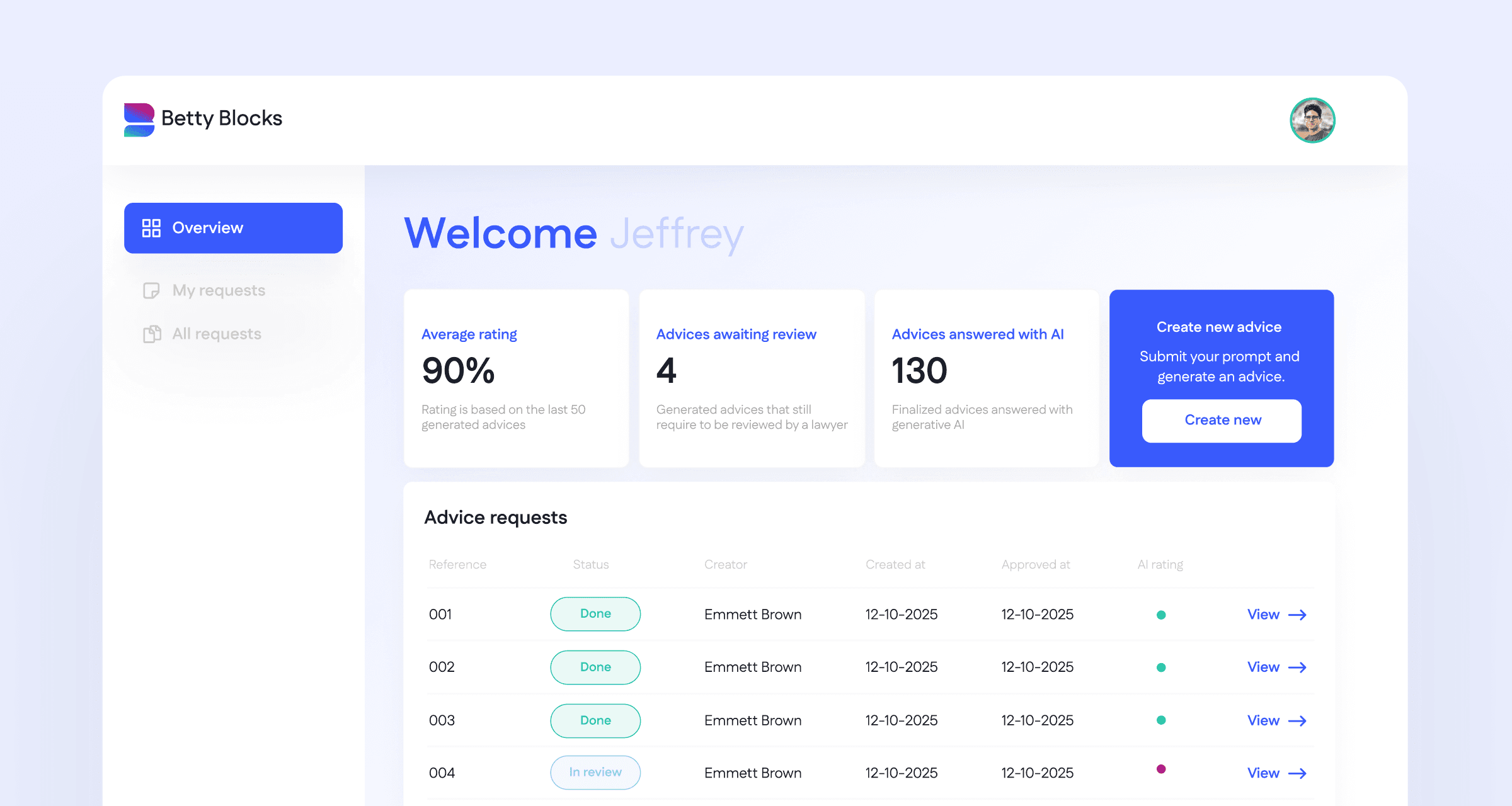
AI coding tools are a governance nightmare. Traditional low-code platforms slow you down and lock you in. Custom development gives full control and leaves knowledge with the developer who wrote it. Betty Blocks is the only platform where speed and control go hand in hand.
Category
Vibe coding tools
AI Coding Agents
Platform extensions
AI Application Generation
Custom Development
Key players
Lovable, Base44, Cursor, Replit
Claude Code, GitHub Copilot, ChatGPT
Mendix, OutSystems
Power Apps, ServiceNow, Salesforce
Betty Blocks
Internal teams, agencies
Core strenght
Speed to prototype, low barrier to entry
Developer productivity, broad capability
Enterprise governance, compliance track record
Deep ecosystem integration
AI-native architecture. Governed. Open.
Full control, no vendor dependency
Core weakness
No structural persistence, no governance, full app rebuild on re-prompt
Developer-dependent; no deployment or governance layer
AI as IDE accessory; proprietary runtime lock-in; limited code export
Vendor lock-in; external user licensing costs; limited cross-system scope
Emerging category; buyer education required
Slow to production; knowledge leaves with developers
Frequently Asked Questions
Got questions?
We have answers.
What should a regulated enterprise require from an AI application platform?
At minimum, evaluate governance, identity and access, auditability, enterprise integration, controlled deployment, application ownership, portability and exit. AI generation speed matters, but it should not bypass the controls required to run software in production.
How should governance work for AI-generated applications?
Governance should apply across the application lifecycle: who can create, review, change, approve and release an application, plus a traceable record of those actions. The controls should be demonstrated in the platform, not added as a policy after the app is generated.
What should we test before an AI-generated application reaches production?
Test permissions, sensitive-data access, integrations, auditability, approval flows, environment separation, deployment controls, rollback and operational ownership using a real application use case.
How should regulated enterprises evaluate vendor lock-in?
Ask what can be exported, what still depends on the vendor runtime or services, how data and integrations move, and whether the application can continue to run and be maintained if the vendor relationship changes.
Is EU data residency enough for digital sovereignty?
No. Data location is one part of the evaluation. Regulated organizations should also assess legal jurisdiction, supplier dependency, infrastructure choices, application portability, governance and whether there is a credible exit path.