Business teams are shipping AI-generated apps faster than IT can track them. AI application governance means every app, prompted or coded, moves through your existing controls from the moment it is created. Not after. Not on a roadmap.

Governance tools
IT oversight on every initiative, every app
Business teams will build with AI whether IT approves it or not. Betty Blocks gives every builder, trained developer or business user, the same guardrails inside one platform. IT Managers get enforceable permissions and roles that travel with the app. Enterprise Architects get one governance model instead of an exception per tool. CIOs get a software catalog they can defend in an audit.
Review changes
Every build passes through the same review
AI app generatuon does not remove the need for review. It raises the stakes. Every app built on Betty Blocks, prompted or hand coded, runs through the same release checks your platform team already trusts.
Benefits
AI application governance cannot be an afterthought
One enterprise we work with ran 4,000 AI initiatives last year. Three reached production. The gap was not ambition, it was the absence of governance built in.. Betty Blocks treats permissions, authentication, and role assignment as core platform features, not settings added after something already went wrong. Every app citizen developers build stays inside the boundaries IT already defined, from the first prompt.
Easy to keep track
Software catalog
Shadow AI you cannot see is not innovation, it's risk. Betty Blocks catalogs every initiative, every app, and every duplicate across the organization into one place IT can see and control.


Password authentication
SSO/ 2F Authentication
One weak login is one audit finding. Betty Blocks lets you enforce SSO or 2FA on any application, no exceptions.
User control
User Permissions
A fragmented stack means a fragmented permission model, until it does not hold. Betty Blocks gives administrators one hierarchical, granular permission structure across every application, so citizen development stays inside IT standards from the first build.

Set permissions
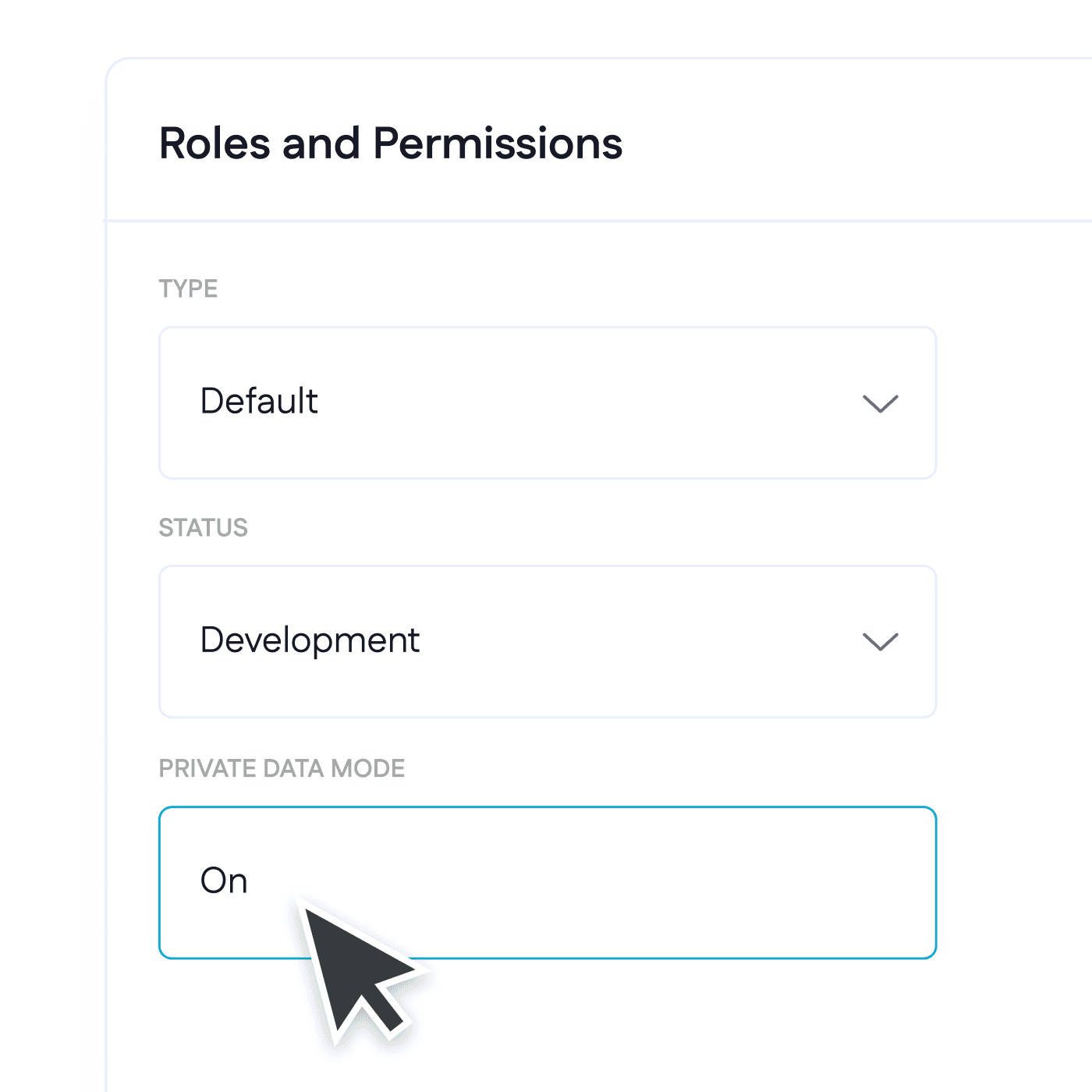
Private Data Mode
Not every builder needs access to everything. Private Data Mode limits visibility to users holding the builder role, so sensitive data stays contained even as more people build.
Frequently Asked Questions
Got questions?
We've got answers.
What is AI application governance?
I application governance is the set of controls, permissions, and audit processes that keep AI-generated and human-built applications compliant with IT policy. Without it, AI-generated apps become shadow IT, connected to real data and making real decisions nobody signed off on.
How is Betty Blocks different from AI coding tools?
AI coding tools like Copilot and Cursor generate code fast but leave governance to you, with no shared permissions, no audit trail, and no portfolio view. Betty Blocks puts every AI-generated app through the same DTAP, RBAC, and audit pipeline your hand-coded software already uses.
How do I roll out governed citizen development without slowing my team down?
Start by giving business builders sandboxes and role-based permissions instead of a blanket policy against building. Betty Blocks lets citizen developers build and test freely inside guardrails IT has already defined, so adoption is gradual and controlled rather than a sudden free-for-all.
Is Betty Blocks secure enough for a regulated enterprise?
Yes. Betty Blocks is ISO 27001 certified and enforces SSO, 2FA, granular role-based permissions, and a full audit trail on every application built on the platform. Governance tools are standard in every pricing tier, not an add-on.
Are governance tools included in Betty Blocks pricing, or are they a paid add-on?
Governance tools are included as a core part of the Betty Blocks platform in every pricing tier. There is no separate charge to turn on permissions, audit trails, or DTAP environments.
What happens if a governed application breaks or ships something wrong?
Betty Blocks includes version control and rollback, so administrators can restore a previous version or recover from backup at any time. Sandbox environments let teams test changes before anything reaches production, so a bad deploy is a fix, not a crisis.